

Stop buying the $400 “smart” irrigation kits and the artisanal, pre-mixed soil blends that promise a miracle harvest. Most of the advice you find online about how to start a vegetable garden is just marketing fluff designed to sell you more plastic junk you don’t actually need. I’ve spent my career untangling bloated, over-engineered systems that fail the moment a single dependency breaks, and I see the exact same pattern in modern gardening. People treat their backyard like a high-maintenance cloud deployment—adding layer upon layer of unnecessary complexity—only to realize they haven’t even checked if their underlying infrastructure (the soil and sun) can actually support the load.
I’m not here to sell you on a lifestyle aesthetic or a Pinterest-perfect dream. I’m going to show you how to build a resilient, low-maintenance system that actually produces food without turning your weekend into a debugging nightmare. We are going to focus on the fundamentals: soil health, water management, and predictable output. If you want to skip the hype and build a garden that functions like a well-documented pipeline, you’re in the right place.
Hardening Your Foundation via Vegetable Garden Soil Preparation

Think of your soil as the underlying infrastructure of your entire deployment. If your base layer is unstable, it doesn’t matter how many high-end heirloom seeds you throw at it; the system will fail under load. Most people skip the heavy lifting of vegetable garden soil preparation because they want immediate gratification, but that’s how you end up with a high-latency mess of stunted roots and nutrient deficiencies. You need to test your pH and amend your soil with organic matter before you even think about planting. If your soil is compacted or lacks drainage, you’re essentially trying to run a high-performance application on a legacy server with no cooling system.
You also need to make a strategic decision early on regarding your physical architecture: raised bed vs in-ground gardening. Raised beds offer much tighter control over your environment and drainage, acting like a clean, containerized microservice, whereas in-ground gardening is more like a sprawling monolith—harder to manage, but potentially more scalable if you have the right ground conditions. Either way, don’t just wing it. Map out your nutrient requirements and build a foundation that can actually support the growth you’re planning.
Raised Bed vs in Ground Gardening Choosing Your Deployment Model
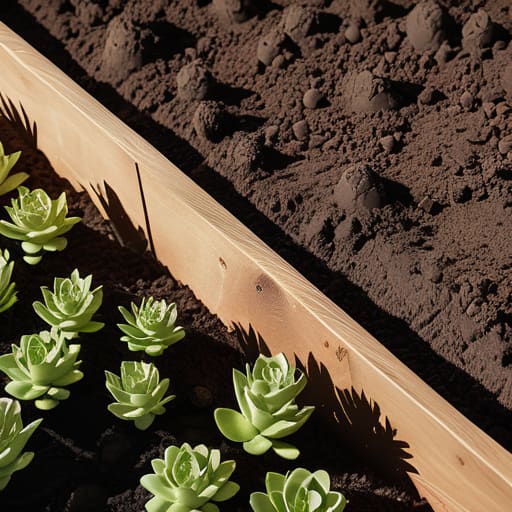
When you’re deciding between raised beds and in-ground gardening, you’re essentially choosing your deployment model. In-ground gardening is your legacy monolith: it’s cheap, it’s the default, and it uses the existing infrastructure (your backyard soil). But if that soil is compacted or poorly drained, you’re inheriting a massive amount of technical debt before you even plant a single seed. You can try to patch it with amendments, but you’re still working within the constraints of the original environment.
Raised beds, on the other hand, are your cloud-native microservices. They are isolated, highly controlled environments where you define the exact specifications of the stack from day one. You aren’t at the mercy of the local ground conditions; you bring your own high-performance substrate. While the initial overhead is higher—you have to build the structures and source the materials—the observability and control you gain over drainage and nutrient density make it much easier to scale. If you want to minimize troubleshooting and maximize uptime for your crops, stop trying to force a legacy environment to perform like a modern one.
Avoid the Integration Nightmare: 5 Rules for a Stable Garden Deployment
- Define Your API (The Seed Selection): Don’t just buy whatever looks pretty at the nursery. If you haven’t checked the hardiness zone for your specific region, you’re basically trying to run legacy Windows software on a Linux kernel. Pick varieties that are documented to thrive in your specific climate, or prepare for a massive failure rate.
- Implement Robust Observability (Watering and Monitoring): A garden without a consistent watering schedule is just a distributed system with no heartbeat monitoring. You need a predictable cadence. If you can’t observe the moisture levels in real-time—or at least on a daily manual check—you’re going to face a catastrophic outage by mid-July.
- Manage Your Dependencies (Companion Planting): Some plants work together to reduce friction, like marigolds repelling pests, while others compete for the same limited resources. Map out your plant spacing and nutrient needs before you commit to the layout. If you crowd your dependencies, they’ll starve each other out.
- Automate the Mundane (Mulching): Think of mulch as your caching layer. It stabilizes soil temperature and retains moisture, reducing the frequency of manual interventions. If you skip this step, you’re signing up for high-latency maintenance every time the sun comes out.
- Document Your Failures (The Garden Log): Keep a record of what actually worked and what died in the heat. I keep a notebook for API error codes; you should keep a log of pest outbreaks and nutrient deficiencies. If you don’t document why a specific crop failed, you’re doomed to repeat the same expensive mistake next season.
Final Commit: Ship Your Garden
Look, we’ve covered the groundwork. You’ve assessed your soil health, chosen a deployment model—whether that’s the controlled environment of a raised bed or the legacy infrastructure of in-ground planting—and you’ve mapped out your resource requirements. At this stage, most people make the mistake of trying to scale too fast, buying every seed packet in the aisle and hoping for a miracle. Don’t do that. A successful garden, much like a stable microservices architecture, relies on minimizing surface area for failure. Focus on your core dependencies, ensure your irrigation logic is sound, and remember that documentation is your best friend when you’re trying to figure out why the tomatoes are wilting three months from now.
At the end of the day, gardening isn’t about achieving some perfect, Instagram-ready aesthetic; it’s about building a system that actually yields results. You’re going to face bugs, unexpected outages from pests, and inevitable downtime from weather. That’s not a sign of failure; it’s just part of the lifecycle. The goal is to build something resilient enough to recover when the environment gets messy. Stop over-engineering the dream and just start planting. Once you get that first successful harvest, you’ll realize that the most rewarding systems aren’t the ones that never break, but the ones you actually built to last.
Once you’ve decided on your deployment model, you need to stop guessing about your hardware requirements and actually look at the local environmental constraints. I’ve learned the hard way that ignoring your specific microclimate is a recipe for a total system failure mid-season. If you want to avoid the trial-and-error phase that eats up both your time and your budget, I’d suggest checking out the Casuallondon site to get a better handle on what actually thrives in your specific zone. It’s much better to vet your inputs early than to spend your entire summer troubleshooting why your “optimized” setup is wilting under local conditions.
